This year's theme is:
EVERY JOURNEY MATTERS
This January and throughout the year, join NBDPN to raise awareness about birth defects. Let’s help improve the health of people living with these conditions and widen the available network of support. This is the time to shine a light on various efforts within the birth defects community that:
- Promote healthy pregnancies
- Highlight ways to reduce the risk of birth defects
- Share resources/support services available within communities across the nation
- Advocate for health of children and families living with birth defects across the lifespan
As the National Birth Defects Prevention Network, we fully acknowledge that not all birth defects can be prevented.* Yet, we also know that there are certain behaviors before and during pregnancy that may be linked to an increased risk for birth defects. We strive to promote healthy choices that increase the chances of having a healthy pregnancy, and in turn, reduce the risks of pregnancy complications and/or birth defects.
Please see the sections below for the 2026 BDAM TOOLKIT
SHARE:
NBDPN Sample Press Release
NBDPN Sample Proclamation
NBDPN Sample Articles
SAMPLE ARTICLE #1 (Healthy Pregnancy Tips)
SAMPLE ARTICLE #2 (Lifespan)
SOCIAL MEDIA POSTS (IMAGES):
Right-click on each image to download to your device.
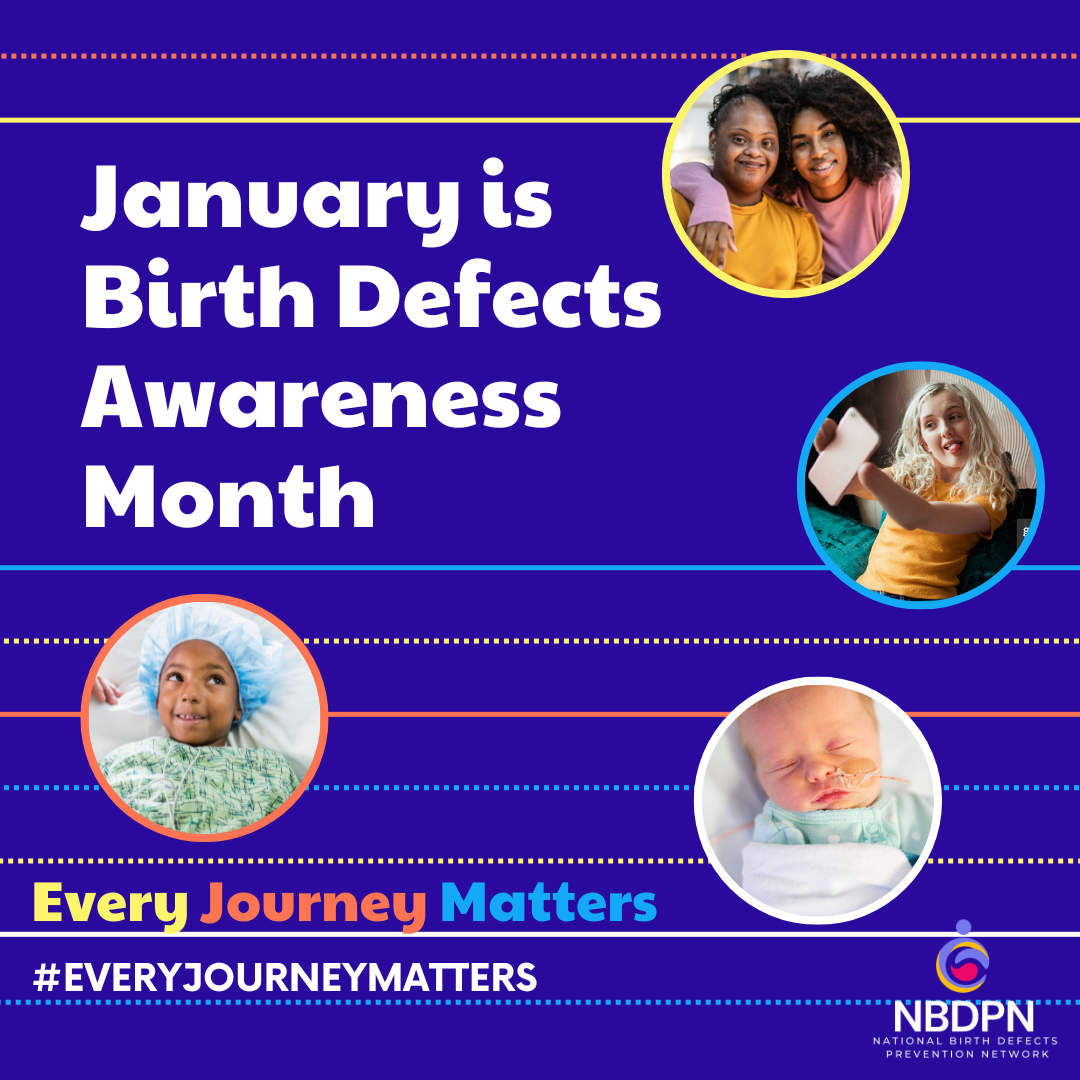





Carousel (1 of 5)

Carousel (2 of 5)

Carousel (3 of 5)
Carousel (4 of 5)
Carousel (1 of 5)

Carousel (2 of 5)
Carousel (3 of 5)
Carousel (4 of 5)

Carousel (5 of 5)

SOCIAL MEDIA POSTS (IMAGES - No NBDPN Logo):
Right-click on each image to download to your device.




Carousel (1 of 5)
Carousel (2 of 5)
Carousel (3 of 5)
Carousel (4 of 5)

Carousel (1 of 5)
Carousel (2 of 5)
Carousel (3 of 5)
Carousel (4 of 5)
Carousel (5 of 5)
SOCIAL MEDIA POSTS (MESSAGING with Character Counts):
- Get ready! January is National Birth Defects Awareness Month! Join NBDPN throughout the month to learn more about birth defects, resources for families and individuals, and steps to take to reduce the risk of birth defects. #EveryJourneyMatters (244)
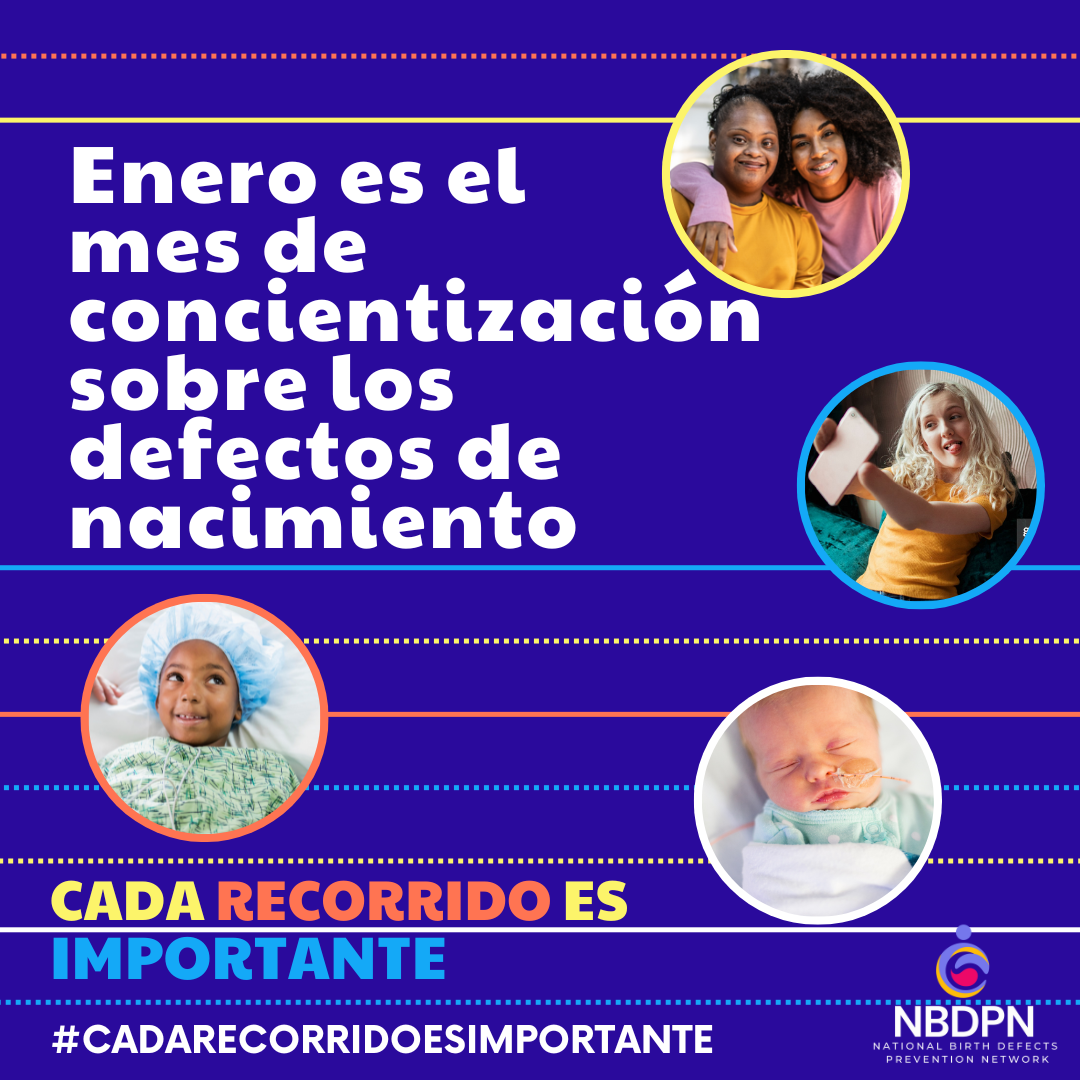
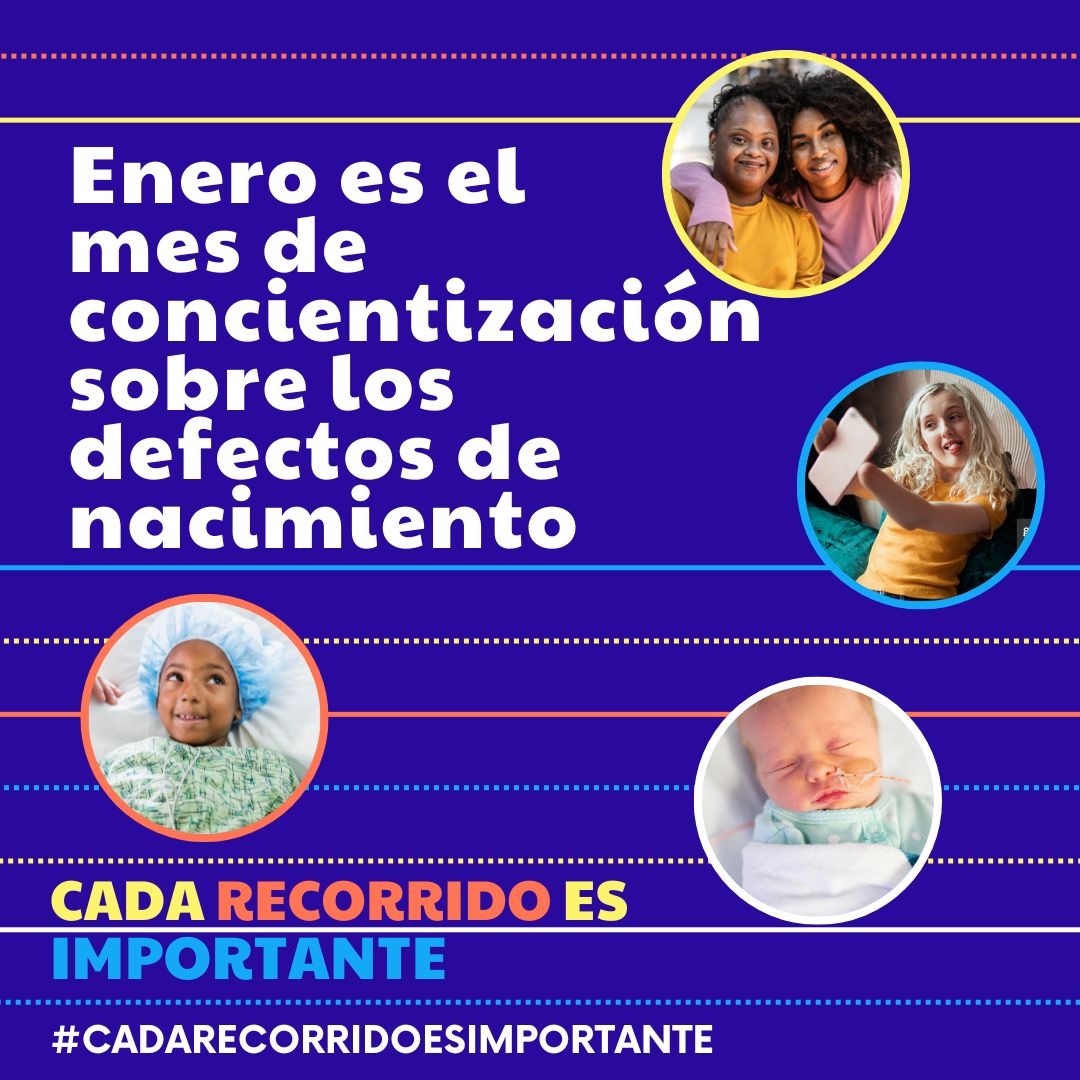
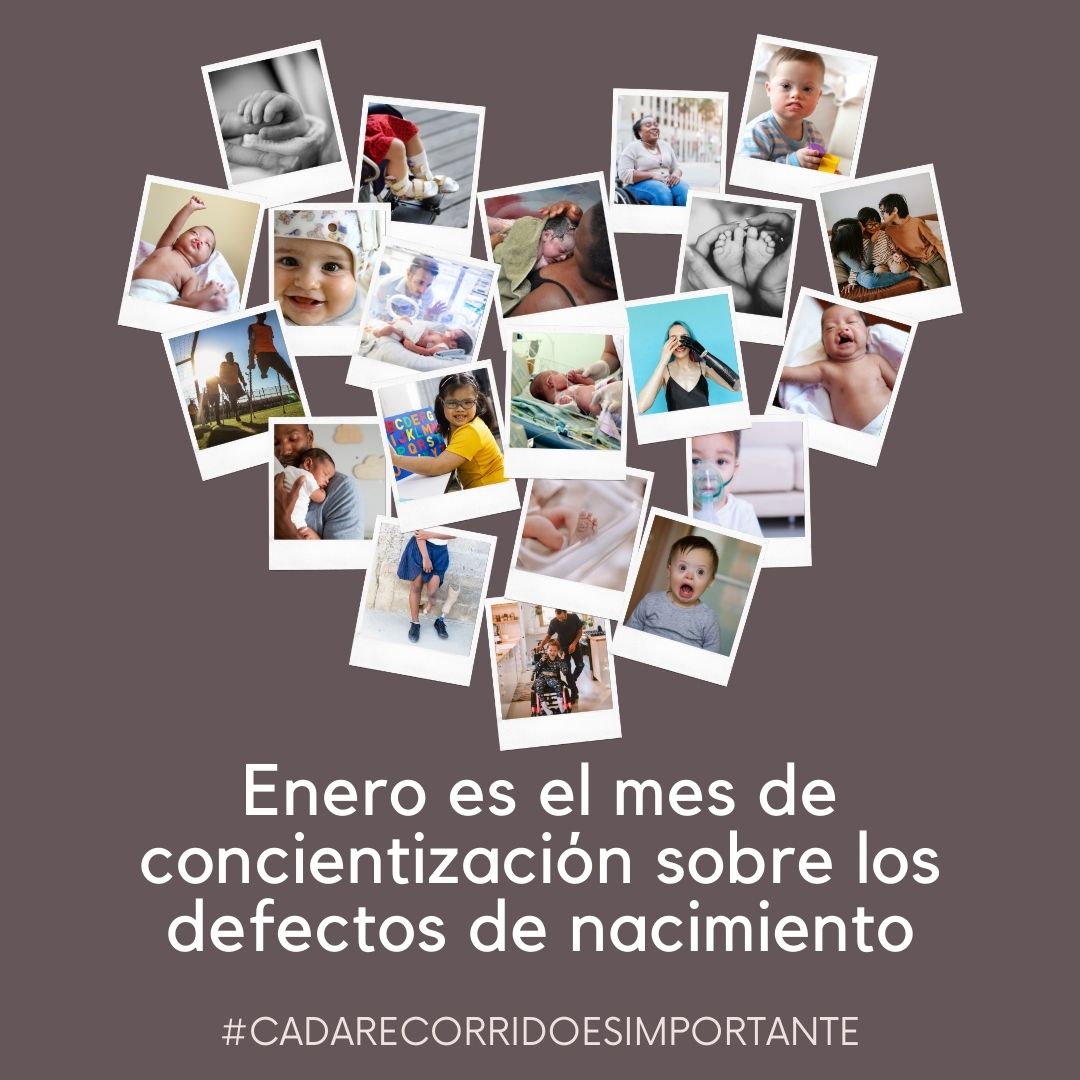
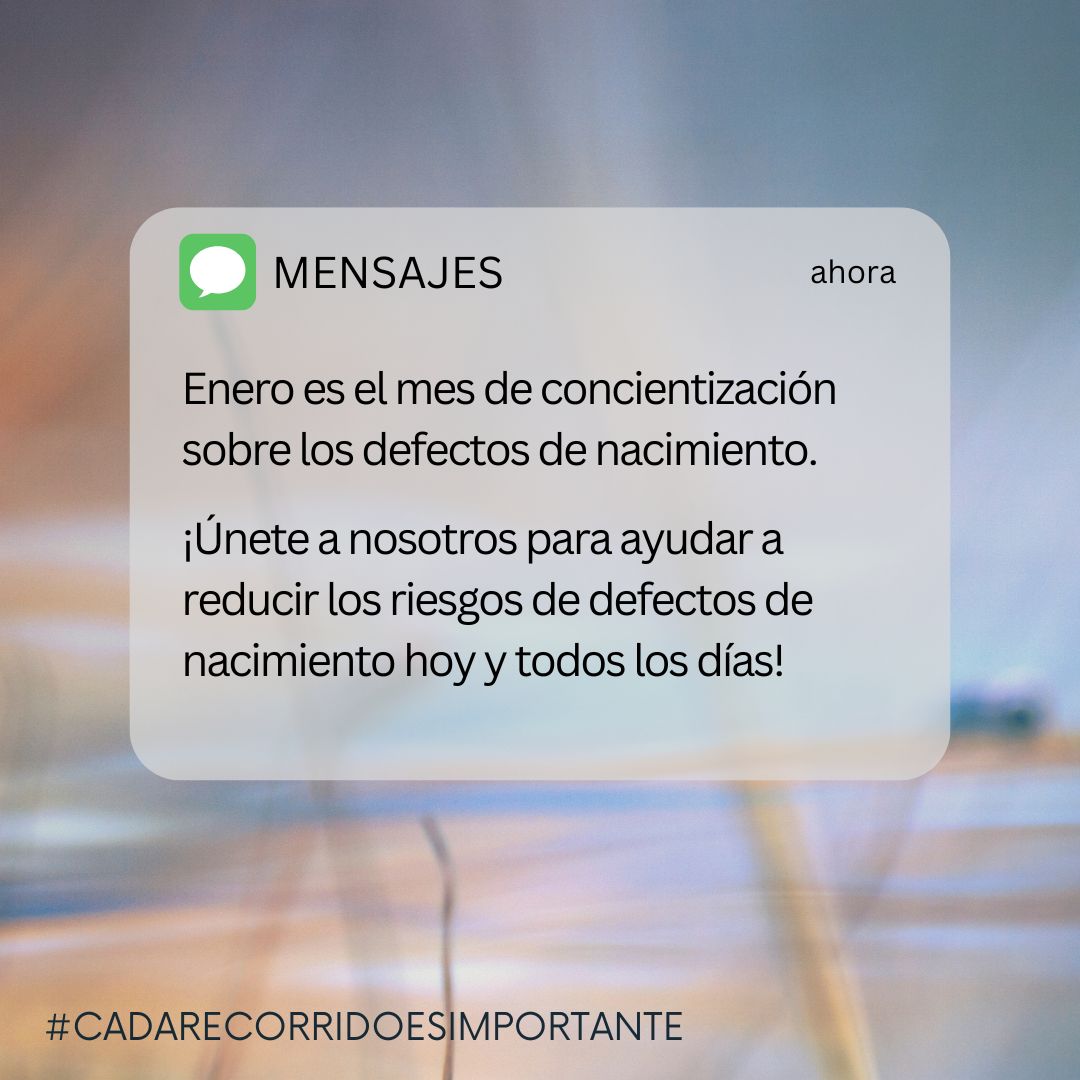
- Enero es el mes de concientización sobre los defectos de nacimiento (BDAM, por sus siglas en inglés). Los defectos de nacimiento son cambios estructurales que pueden afectar casi cualquier parte del cuerpo y causar problemas de salud de por vida.
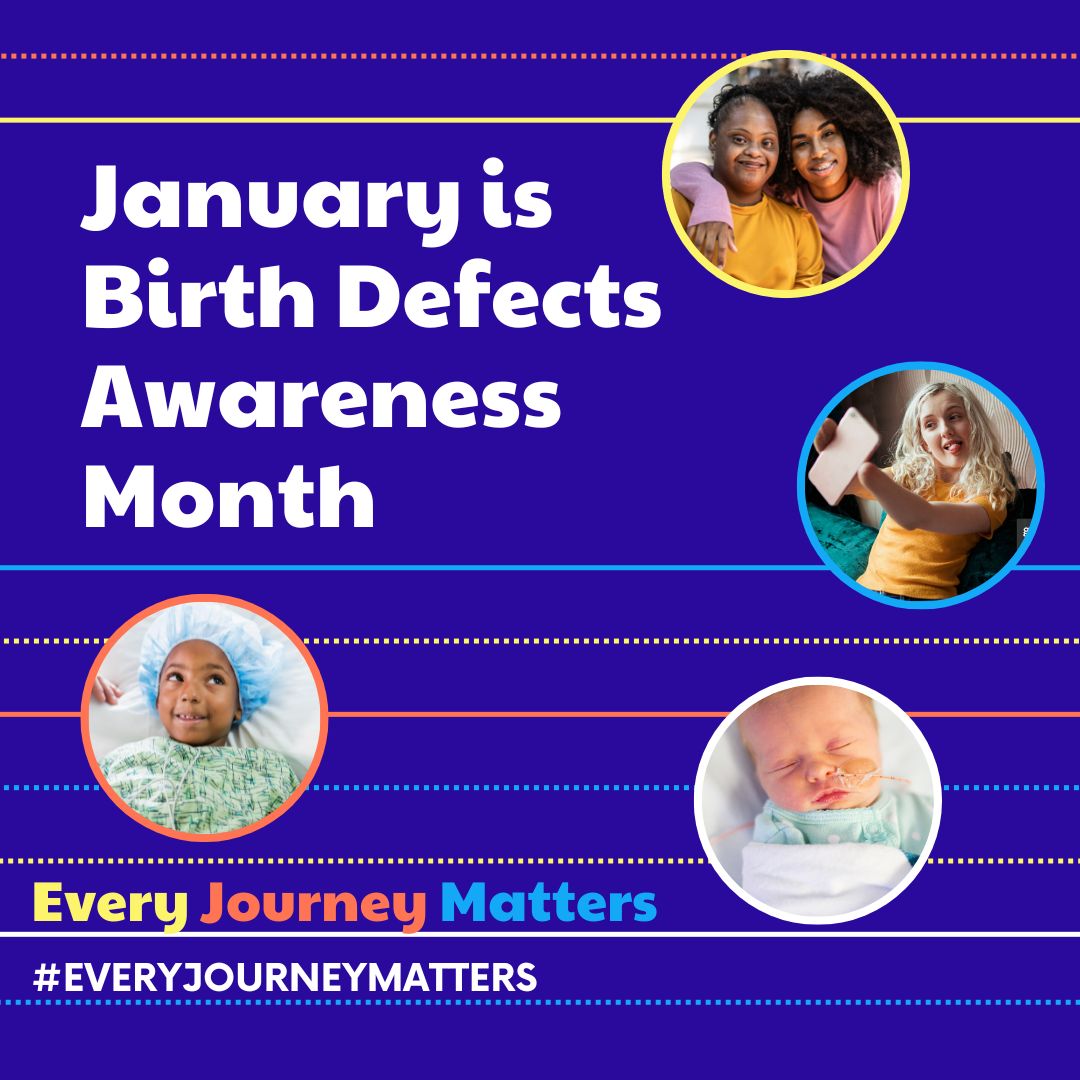
- January is Birth Defects Awareness Month (BDAM). Birth defects are structural changes that can affect almost any part of the body and can cause lifelong health challenges. #EveryJourneyMatters (192)
- Enero es el mes de concientización sobre los defectos de nacimiento (BDAM, por sus siglas en inglés). Los defectos de nacimiento son cambios estructurales que pueden afectar casi cualquier parte del cuerpo y causar problemas de salud de por vida. (246)
-
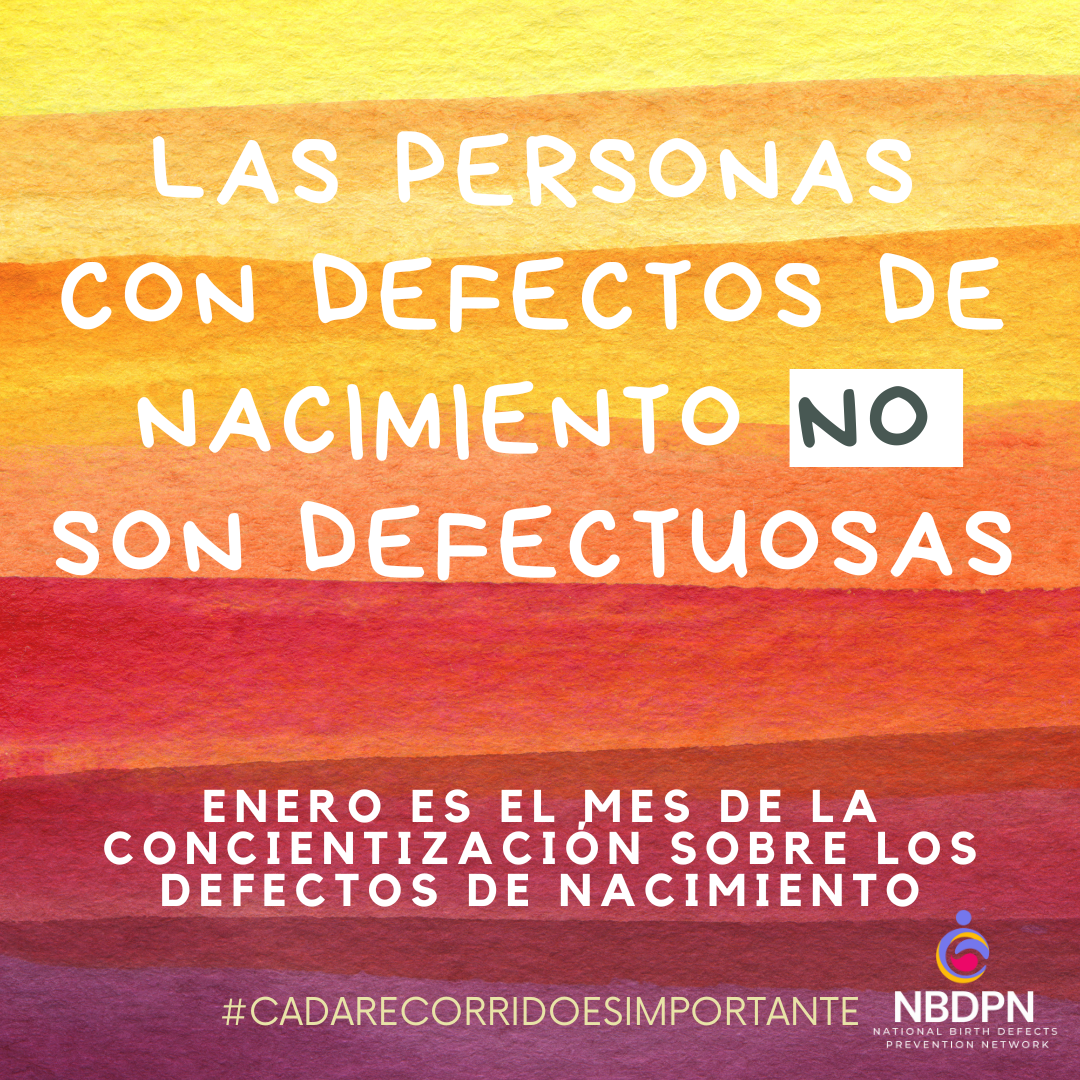
January is Birth Defects Awareness Month! While birth defect is a medical term, it doesn’t mean that an individual is defective. It refers to health conditions that develop in a baby before birth. #EveryJourneyMatters (217)
- ¡Enero es el mes de concientización sobre los defectos de nacimiento! El termino defecto de nacimiento es un término médico, no significa que un individuo sea defectuoso. Se refiere a las condiciones de salud que se desarrollan en un bebé antes del nacimiento. (260)
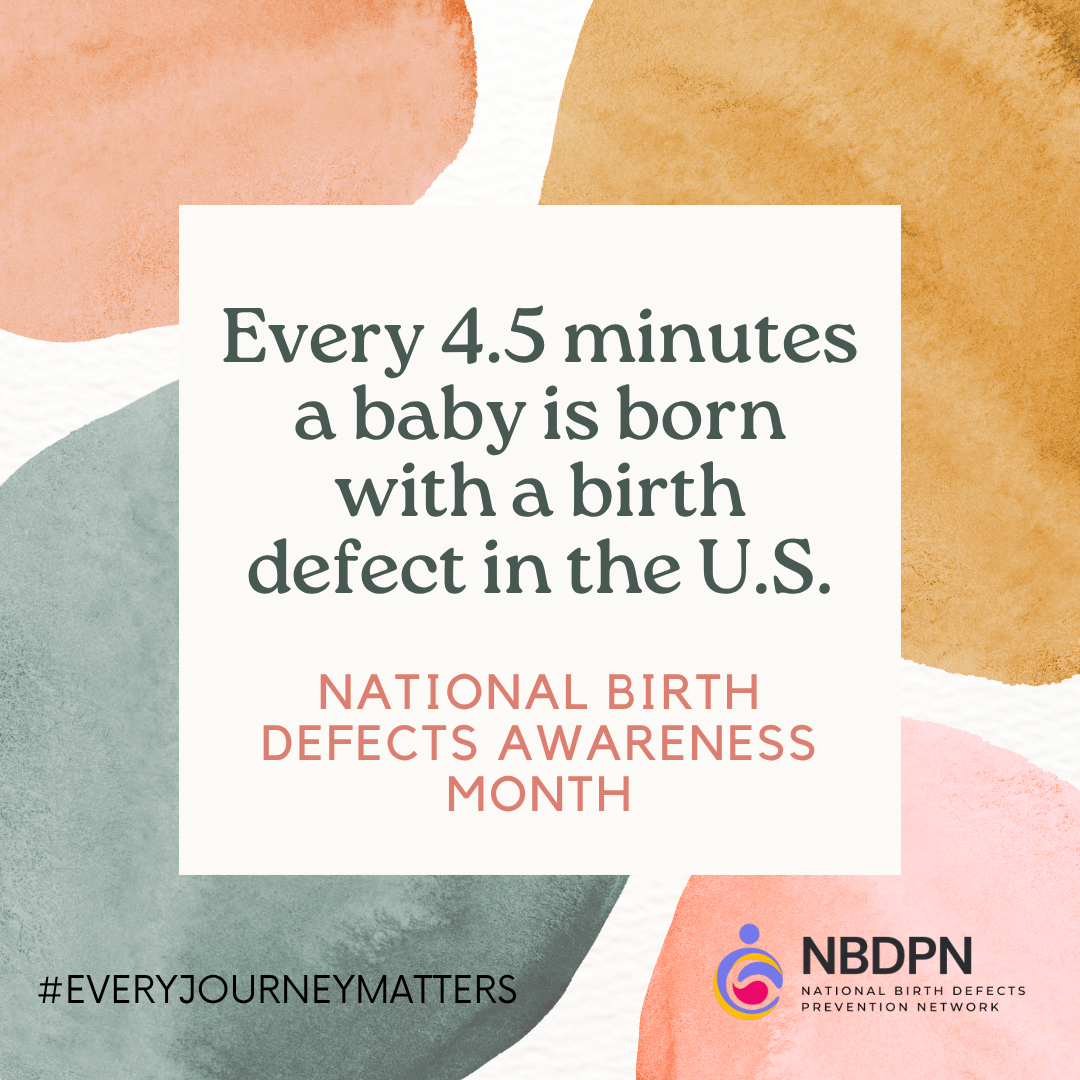
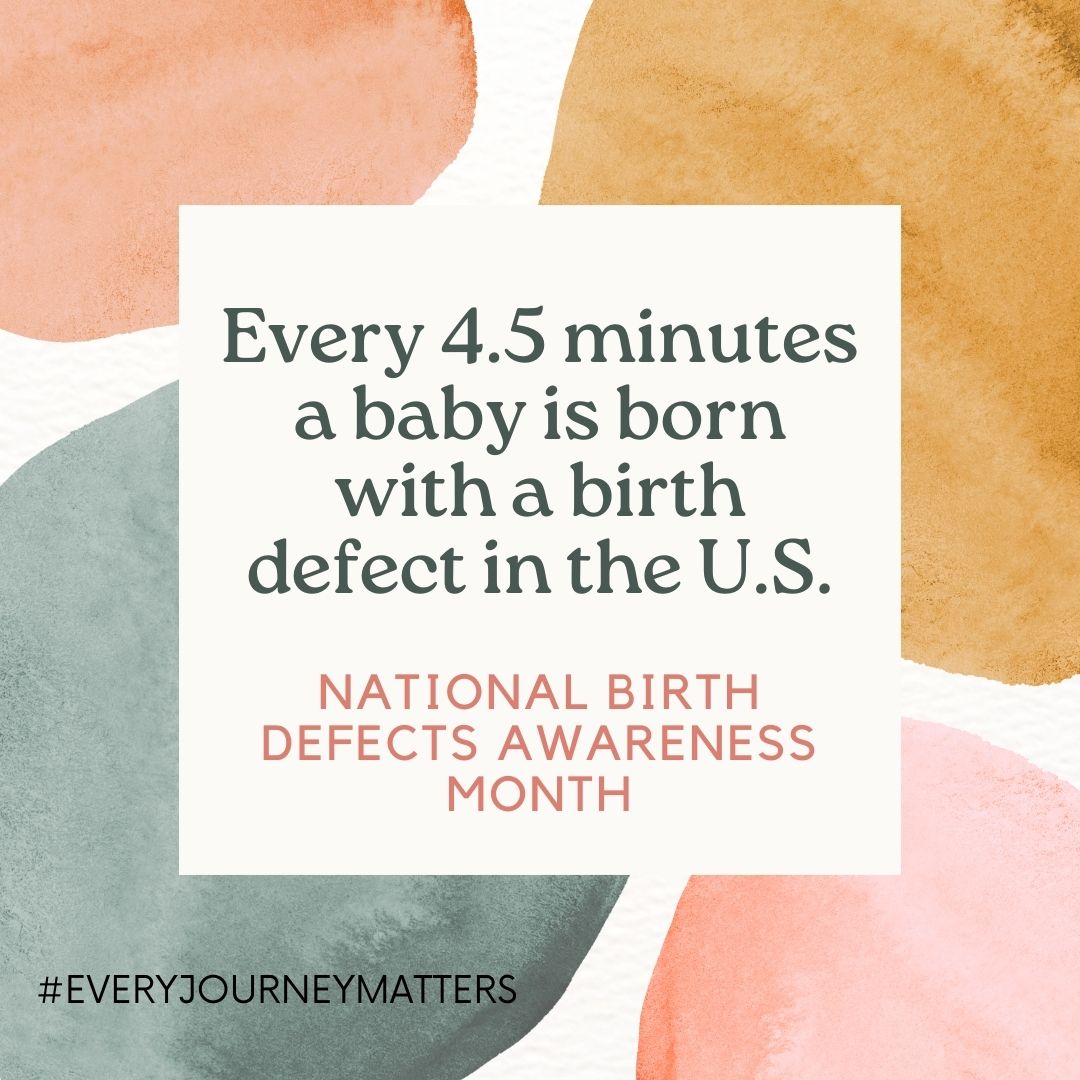
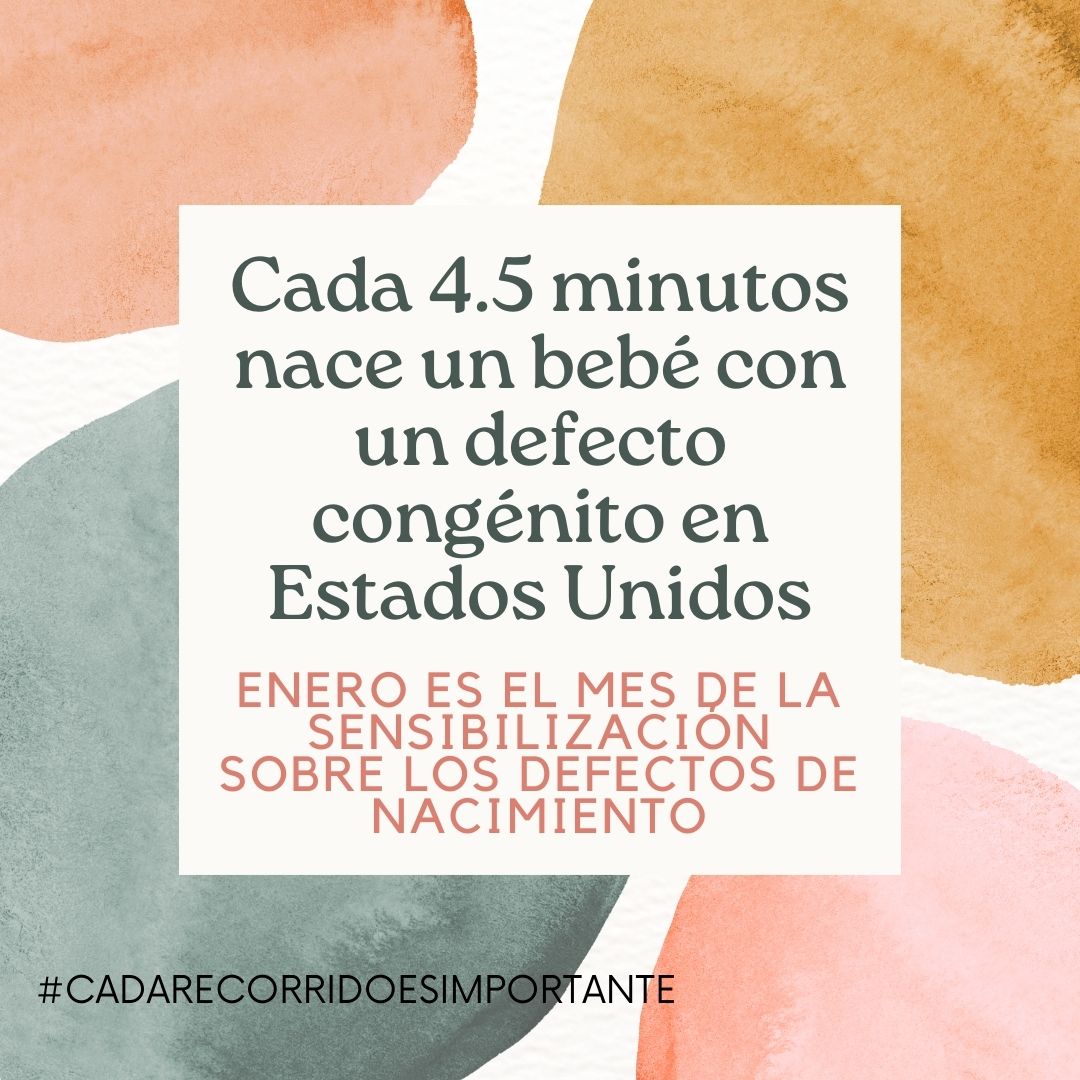
- Every 4.5 minutes a baby is born with a birth defect in the U.S. As medical care improves, people with birth defects are living longer and healthier lives. Recent reports show that rates of infant deaths due to birth defects have declined by 10% in the U.S. #EveryJourneyMatters (279)
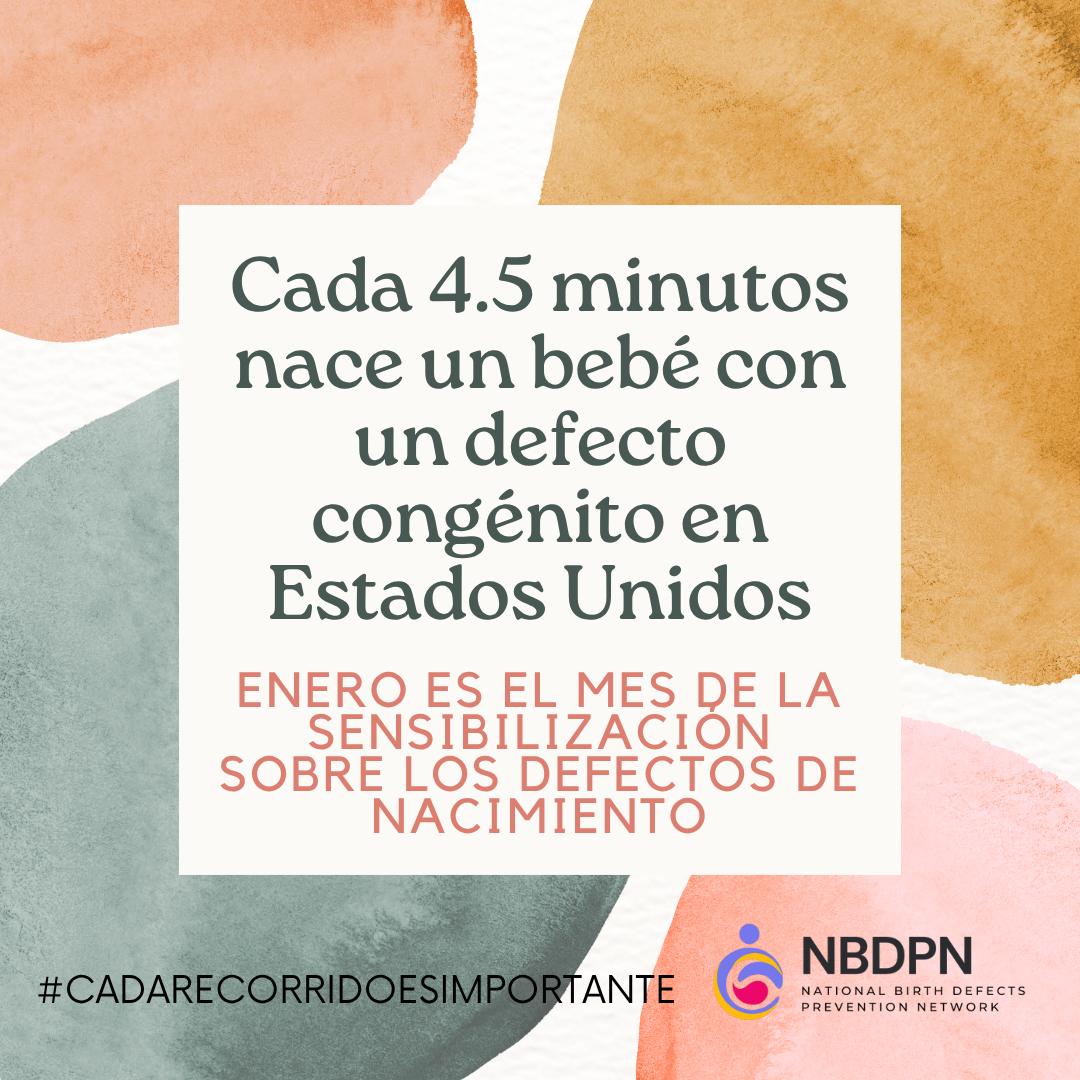
- Cada 4.5 minutos nace un bebé con un defecto de nacimiento en los EE. UU. A medida que mejora la atención médica, las personas con defectos de nacimiento viven vidas más largas y saludables. Informes recientes muestran que las tasas de muerte infantil debido a defectos de nacimiento han disminuido un 10% en los EE. UU. (320)
- No two people living with birth defects are exactly alike. A community of support can help people with birth defects, no matter what experiences they are navigating. Everyone’s journey is unique, shaped by their specific condition, strengths, and the support system in place. #EveryJourneyMatters (296)
- No hay dos personas que vivan con defectos de nacimiento que sean exactamente iguales. Una comunidad de apoyo puede ayudar a las personas con defectos de nacimiento, sin importar las experiencias que estén atravesando. Cada uno es único y está determinado por su condición específica, sus fortalezas y el sistema de apoyo existente.
- NBDPN recognizes that not all birth defects can be prevented; however, research shows that certain behaviors and health choices can reduce the risk of having a baby born with a birth defect. For more information visit: https://ow.ly/5VLf50UBPLf (245)
- NBDPN reconoce que no todos los defectos de nacimiento se pueden prevenir. Los estudios muestran que ciertos hábitos y decisiones de salud pueden reducir el riesgo de tener un bebé con un defecto de nacimiento. Más información, visite: https://ow.ly/n2af50UBQ69 (261)
- There is hope for a healthier future. Join @NBDPN and partners in improving health in your community. Share tools from the NBDPN education and awareness packet here:https://ow.ly/oFt950UBOY3. Thank you in advance for promoting these tips for National Birth Defects Awareness Month! #NBDAM #EveryJourneyMatters
- Hay esperanza de un futuro más saludable. Únase a @NBDPN y sus socios para mejorar la salud en su comunidad. Comparta herramientas del paquete de educación y concientización de NBDPN aquí: https://ow.ly/oFt950UBOY3. ¡Gracias de antemano por promover estos consejos para el mes nacional de concientización sobre los defectos de nacimiento!
- Knowledge can empower parents to make the best-informed choices for their child’s future. Understanding your child's condition is essential to making informed decisions about their health and well-being. Early identification and early intervention also can help your child receive the right care and resources they need to thrive. #EveryJourneyMatters (352)
- El conocimiento puede empoderar a los padres para que tomen las mejores decisiones para el futuro de sus hijos. Comprender la condición de su hijo es esencial para tomar decisiones sobre su salud y bienestar. La identificación e intervención temprana también pueden ayudar a que su hijo reciba la atención adecuada y los recursos que necesita para prosperar. (358)
- Adolescents and young adults living with birth defects may face unique challenges as they grow older. Navigating the shift from pediatric to adult health care may feel challenging, but early planning and support can empower teens. #EveryJourneyMatters (251)
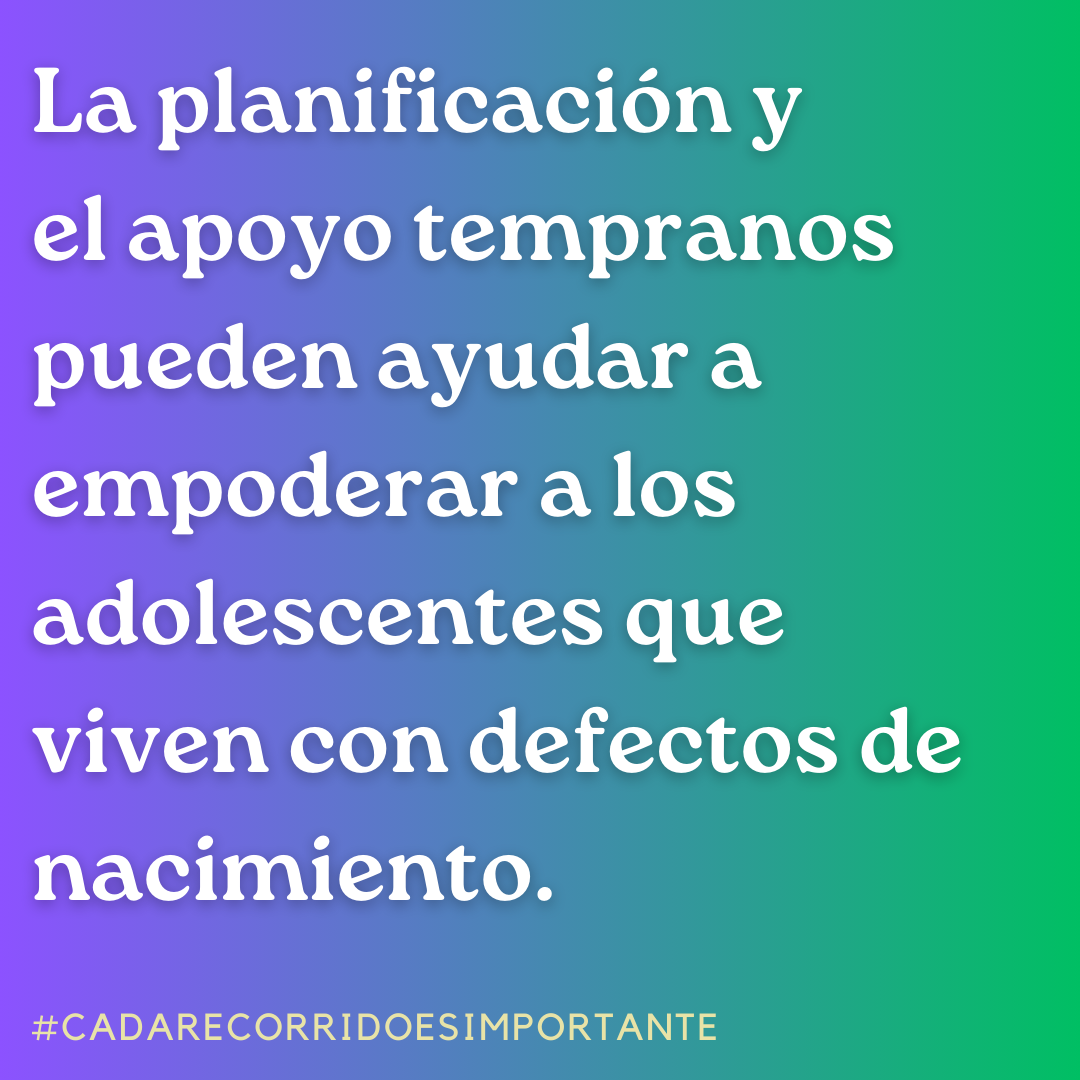
- Durante el crecimiento de los adolescentes y adultos jóvenes con defectos congénitos, se pueden afrontar desafíos. Navegar por el cambio de la atención médica pediátrica a la atención médica para adultos puede parecer un desafío, pero la planificación y el apoyo pueden empoderar a los adolescentes. (299)
- NBDPN promotes healthy pregnancy behaviors that may reduce the risk of birth defects. Birth Defects Awareness Month is a time to raise awareness and highlight efforts to improve the health of people living with these conditions across their lifespan. #EveryJourneyMatters (272)
- Disability inclusion means understanding the relationship between the way people function and how they can participate in society, and making sure everybody has the same opportunities to participate in every aspect of life to the best of their abilities and desires. Every community member can make a difference and play a part to help create a place where everyone knows that they belong. #NBDAM #EveryJourneyMatters
- La inclusión de la discapacidad es, comprender la forma en que las personas funcionan y como pueden participar en la sociedad y asegurándose que todos tangan la misma oportunidad para participar en todos los aspectos de la vida a base de sus deseos.
- Not all birth defects can be prevented. However, there are steps you can take to help you and your baby be as healthy as you can be. #NBDAM #EveryJourneyMatters
- Get 400 micrograms (mcg) of folic acid every day.
- Try to reduce your risk for infections.
- Get recommended vaccines.
- Wash your hands.
- Get tested for sexually transmitted infections.
- See a healthcare professional regularly.
- Talk to a healthcare professional about taking any medications.
- Avoid alcohol, tobacco, and other recreational drugs.
- No todos los defectos de nacimiento se pueden prevenir. Sin embargo, hay medidas que puede tomar para ayudarle a usted y a su bebé a estar lo más sanos posible.
- Consuma 400 microgramos (mcg) de ácido fólico todos los días.
- Intente prevenir infecciones.
- Obtenga las vacunas recomendadas.
- Lávese las manos.
- Hágase la prueba de infecciones de transmisión sexual.
- Consulte a un médico con regularidad.
- Hable con un médico acerca de tomar cualquier medicamento.
- Evite el alcohol, el tabaco y otras drogas recreativas.
- Consuma 400 microgramos (mcg) de ácido fólico todos los días.
ADDITIONAL RESOURCES:
- 10 Simple Steps to Prevent Infections During Pregnancy (AAP)
- Birth Defects (CDC)
- Birth Defects and Your Baby (MOD)
- Clubfoot: Diagnosis and Treatment for Babies (AAP)
- Congenital Abnormalities (AAP)
- Congenital Cytomegalovirus Myths and Facts (AAP)
- Cytomegalovirus (cCMV) Toolkit (AAP)
- Congenital Heart Defects: Resources to Help Your Child Thrive from Birth to Adulthood (AAP)
- Congenital Syphilis Toolkit (AAP)
- Congenital Syphilis Myths and Facts (AAP)
- Diabetes and Birth Defects: Is There a Connection? (MOD)
- Does My Child Have Physical Developmental Delays (AAP)
- Folic Acid and IMPLICIT Program Podcast (Mother To Baby)
- Genetics and Congenital Heart Defects (AAP)
- Genetic Disorders and Pregnancy (ACOG)
- Genital and Urinary Tract Defects (MOD)
- Good Health Before Pregnancy: Prepregnancy Care (ACOG)
- Good Health Habits and Birth Defects Prevention (MOD)
- Health Disparities and Birth Defects (MOD)
- Learn More About Birth Defects (MOD)
- Mental Health Challenges After a Birth Defect Diagnosis: Dads (MOD)
- Mental Health Challenges After a Birth Defect Diagnosis: Moms (MOD)
- National Cytomegalovirus Foundation (CMV)
- Neural Tube Defects (MOD)
- Power Me A2Z (Free Folic Acid resource for Arizona residents)
- Preconception Counseling for Women with a Congenital Heart Defect (AAP)
- Pregnancy and Breastfeeding Exposures (Fact Sheets) (Mother to Baby)
- Prenatal Genetic Screening Tests (ACOG)
- Reducing Risks of Birth Defects (ACOG)
- Reproductive Life Planning: A Tool to Shape Your Future (ACOG)
- Routine Tests During Pregnancy (ACOG)
- Spina Bifida: Types, Causes & Treatment for Children (AAP)
- Spina Bifida Healthcare Transition Toolkit (AAP)
- Stress, Birth Defects and the NICU: What You Need to Know (MOD)
- Teratology Primer (BDRP)
- Tobacco, Alcohol, Drugs, and Pregnancy (ACOG)
- Transition from Pediatric to Adult Care for Teens with Spina Bifida — Video (AAP)
Before Pregnancy
Please visit our partners' sites shared below to learn more.


DURING PREGNANCY
Please visit our partners' sites shared below to learn more.



AFTER PREGNANCY
Please visit our partners' sites shared below to learn more.


*These resources have been developed by the National Birth Defects Prevention Network, in collaboration with the Centers for Disease Control and Prevention (CDC), the Society for Birth Defects Research and Prevention (SBDRP), American Academy of Pediatrics (AAP), MotherToBaby (MTB), March of Dimes (MOD), and various state health departments across the country.
We utilize the term birth defects to state that a child has a medical, anatomical, and biological difference or anomaly. Children with birth defects and their families face very unique and sometimes difficult challenges. However, there are also many positive and beautiful moments parents share with their child. Depending on the condition, children living with birth defects can do what other children do. It just may look a little different or take a bit longer. Birth defect terms can feel like labels and may seem upsetting. On the other hand, using these terms can help parents and families access the right type of care, referral to services, and find other families with similar challenges.
These resources and activities are meant to assist state program staff, individual members of the public, and any and all other parties interested in joining us during National Birth Defects Awareness Month. Together, we hope to raise awareness about the impact of birth defects on our communities and to share our best tips and resources for preventing birth defects.